


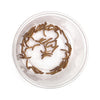
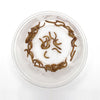

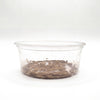
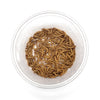
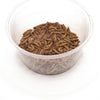
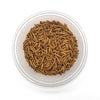
Product description
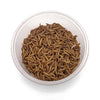
Live mealworms (Tenebrio molitor larvae) for bearded dragons, leopard geckos, backyard chickens, bluebirds and other insect eaters. Pick a size and a count from 50 to 1,000. Every order is packed in wheat bran, which works as bedding and as food.
Sizes and counts
| Size | Length | Typical use |
|---|---|---|
| Mini | up to 0.25" | Hatchling geckos, small frogs, jumping spiders |
| Small | 0.25-0.5" | Young leopard geckos and other small lizards |
| Medium | 0.5-0.75" | Juvenile to adult geckos, wild birds |
| Large | 0.75-1" | Adult lizards, chickens, bluebirds |
Counts: 50 and 100 (8 oz cup), 200 and 500 (12 oz cup) and 1,000 (24 oz cup). For reptiles, choose a worm no longer than the space between your animal's eyes.
When your box arrives
Open the box right away. Mealworms that rode in a cold truck can look dead, so give them time at room temperature before you judge. Once they are moving, put the cup in the fridge. Throw out any worms that have turned black.
How to store mealworms
Keep them in the fridge at 45-50°F. The cold slows them down and holds off pupation. About once a week, set the cup out at room temperature for a day with a slice of carrot or potato so they can eat and drink, then put them back. Remove old vegetable pieces before they mold, and never freeze live mealworms.
Feeding tips
Mealworms are low in calcium, so dust them with a calcium supplement before feeding reptiles and amphibians. Use them as one part of a varied insect diet. For chickens and wild birds, mealworms are a treat, not a meal. A common guideline is to keep treats to about 10% of what a bird eats.
Nutrition facts
| As fed (published values) | Mealworm larvae |
|---|---|
| Moisture | 61.9% |
| Protein | 18.7% |
| Fat | 13.4% |
| Fiber (ADF) | 2.5% |
| Calcium | 169 mg/kg |
| Phosphorus | 2,950 mg/kg |
Source: Finke 2002, Zoo Biology 21:269-285, published values for commercially raised mealworms. These are not lab results from our stock.
Shipping and live arrival
We ship from Stephenson, Michigan by UPS, Monday through Wednesday only. Live arrival is guaranteed on UPS 2nd Day Air and UPS Next Day Air only. UPS Ground and UPS 3 Day Select have no live arrival guarantee.
If worms arrive dead, take a photo of them on a white paper towel and email it to support@pioneerfeeders.com within 2 hours of the UPS delivery scan, with "LAG Claim" and your order number in the subject. A claim covers a cup or order where most of the worms arrived dead; a few losses in a cup are normal, and we pack extra to cover them. Approved claims get a free reship on the next ship day, or store credit or a refund at our discretion. Full terms are on our Live Arrival Guarantee page.
Mealworm FAQ
Do mealworms need to be refrigerated?
Yes, at 45-50°F. Left warm, they grow and start turning into beetles.
How long will they last?
Several weeks in the fridge if you let them eat once a week. Warmer storage shortens that.
Why are some turning into beetles?
That is the normal life cycle, and warmth speeds it up. Keep them cold to slow it down. Pupae can still be fed.
Do mealworms bite?
No. Mealworms can't bite. Superworms can give a small pinch.
What is the difference between mealworms and superworms?
Superworms are a different species. They are bigger, a little fattier and must not be refrigerated. See our live superworms.
Live or dried mealworms for birds?
Many bluebird keepers start with live worms because the movement gets attention. Use a feeder with sides at least 1" tall so they cannot crawl out.
Which shipping option should I pick?
Only 2nd Day Air and Next Day Air carry the live arrival guarantee; Ground does not. In cold weather, the faster services spend less time in the truck.
